REVIEW · LANZAROTE
Kalufa Surf school in Caleta de Famara, Lanzarote
Book on GetYourGuide →Operated by Kalufa Surf School · Bookable on GetYourGuide
Surf lessons here feel dangerously simple.
Kalufa Surf School in Caleta de Famara makes learning feel organized: progressive instruction based on the ISA program, then real time on the water in Lanzarote’s famous surf zone.
I love two things most: small groups (up to 8 students per instructor) and the land lesson first—the basics of waves, currents, and where to position yourself. One consideration: the meeting time shifts with weather, so you’ll want to confirm the schedule directly with them before you show up.
In This Review
- Key Things to Know Before You Go
- Caleta de Famara Waves and a Lesson Plan That Matches Them
- Where You Meet: the VW Van and Famara Beach Parking
- Gear Included: Wetsuit, Surfboard, and What to Bring
- 30 Minutes of Theory: Rules and Wave-Reading That Saves Wipeouts
- Two Hours in the Water: Small Groups, Fast Coaching, Clear Corrections
- Full Day Lesson Option: More Time, More Technique Work
- Price and Value: Is $59 Reasonable?
- Who This Surf Lesson Suits Best
- Weather-Driven Timing: Plan Your Day Around the Sea
- Should You Book Kalufa Surf School in Famara?
- FAQ
- How long is the surf lesson?
- What does the $59 price include?
- Is there a theory or classroom part?
- How many students are in a group?
- Where do I meet the surf school?
- What languages are offered?
- Do I need to be able to swim?
- What age limits are there for kids?
- What should I bring with me?
Key Things to Know Before You Go
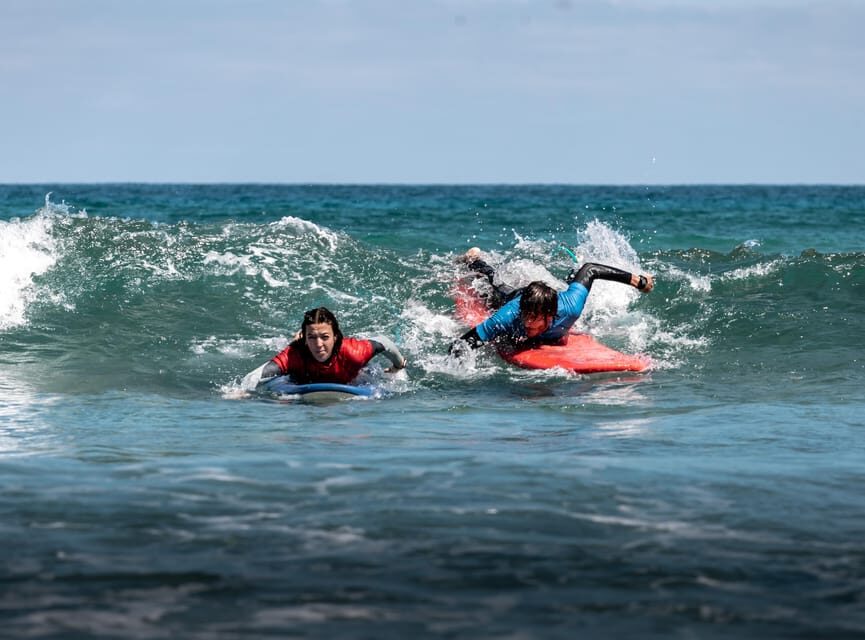
- Max 8 students per instructor for hands-on coaching and faster feedback.
- ISA-based progression with a structured 30-minute theory and preparation block.
- You practice for about 2 hours with coaches right beside you, not just watching.
- Gear is included: board and wetsuit, plus free surf material for the rest of the day after your lesson.
- Weather-driven timing: morning or afternoon sessions depend on conditions, so flexibility matters.
Caleta de Famara Waves and a Lesson Plan That Matches Them
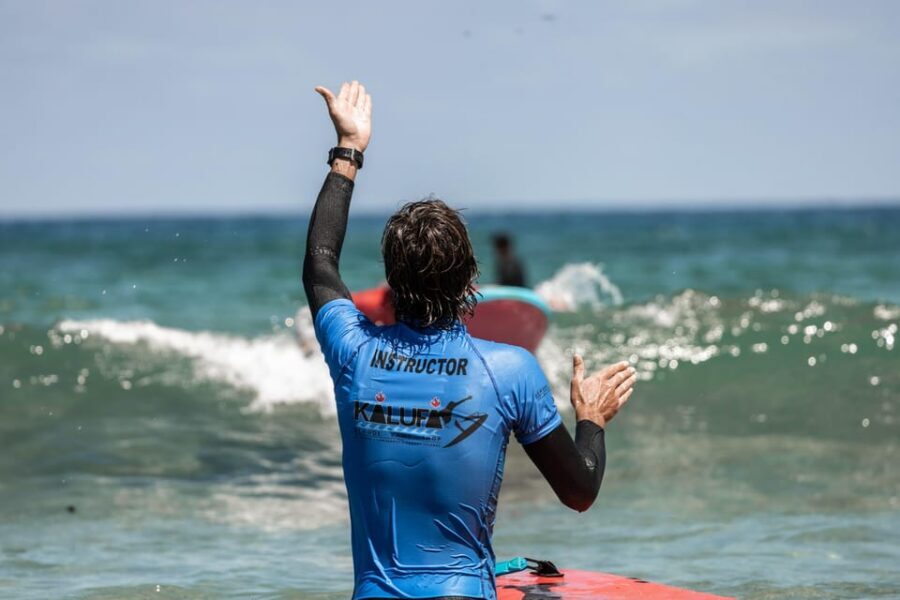
Caleta de Famara is one of those places where the ocean doesn’t care about your confidence level. That’s exactly why a structured approach helps. Kalufa’s focus isn’t just on catching a first wave. It’s also on helping you read what the sea is doing—so you can make better decisions once you’re in the lineup.
You’ll start learning how to understand the ocean’s layout, where surfers set up, and how currents affect your route. Instead of treating each wipeout as mystery, you get tools that explain what you’re seeing. That shift matters fast, especially if you’re a beginner who’s only used to swimming in calm water.
And the school is built for all levels. If you’re starting from zero, you’ll get the fundamentals. If you already surf, you’ll likely appreciate the extra attention to technique and correction in short, practical bursts.
Other Famara tours and surf experiences in Lanzarote
Where You Meet: the VW Van and Famara Beach Parking
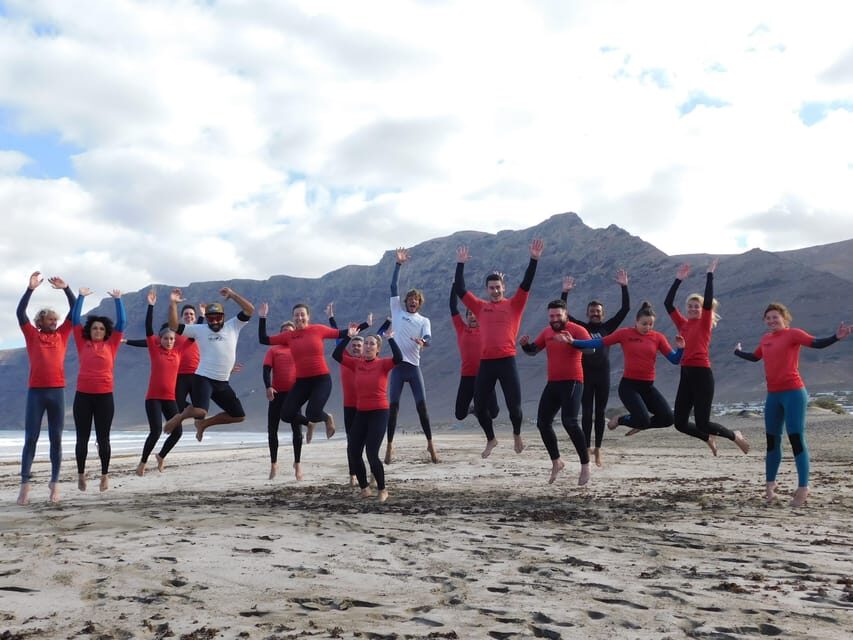
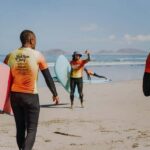
Your lesson meets at Famara Beach parking, at the SOS Lifeguards yellow house zone, where Kalufa’s surf school van waits. The van can be a blue VW T4 or a red VW T5, so it’s worth keeping an eye out when you arrive.
The starting point for the activity is listed at Calle Brezo de Mar, 1, but the actual meet-up is on the beach parking side. Plan to arrive a bit early, because you’ll need a smooth transition from meeting to wetsuit and warm-up.
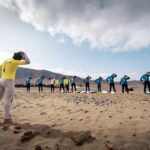
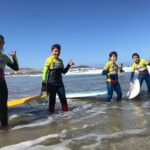
Logistically, the lesson starts with beach setup: you’ll be welcomed, get into your wetsuit, and do a warm-up before you head into instruction mode. If you don’t pack a towel and sunscreen, you’ll feel it quickly. This is one of those lessons where small prep choices save you from feeling rushed.
Gear Included: Wetsuit, Surfboard, and What to Bring
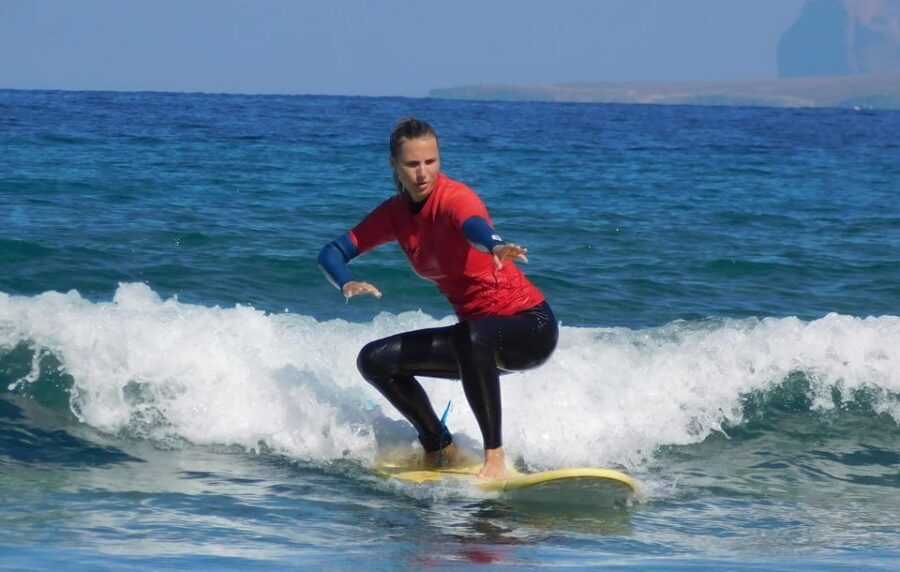
The lesson includes the two big-ticket items: a surfboard and a wetsuit. That’s a real value point in Lanzarote, since renting gear separately can quietly eat your budget.
What you bring matters:
- Swimwear (you’ll wear it under the wetsuit)
- A towel
- Sunscreen
If you’re the type who forgets sunscreen until it’s too late, this is your reminder. Even when the air doesn’t feel scorching, the water and sun combo can burn you fast.
Also, if your goal is to keep surfing after the lesson, Kalufa’s included gear policy helps. They provide free surf material for the rest of the day after your lesson, which means you’re not locked into a single short session.
30 Minutes of Theory: Rules and Wave-Reading That Saves Wipeouts
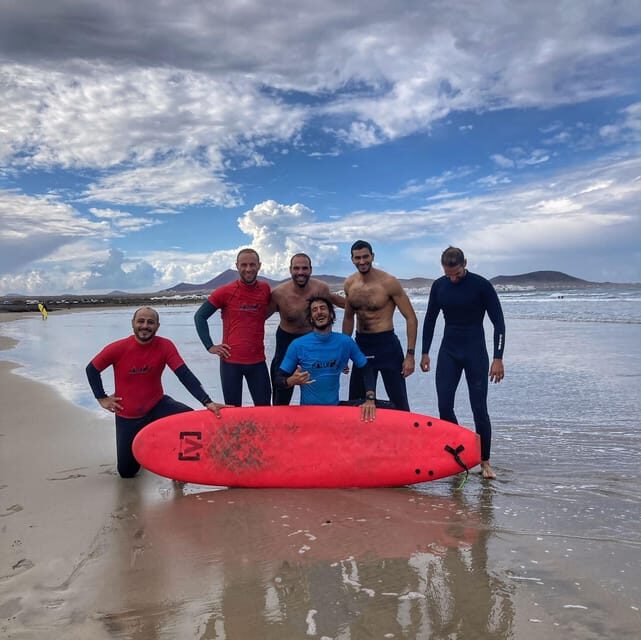
Before you paddle out, you get about 30 minutes of theory and preparation. This isn’t a long lecture. It’s the kind of briefing that helps you avoid the common beginner mistakes that lead to chaos in the lineup.
The key topics are practical:
- Rules of the sport
- How to understand where the peak is (where waves are actually breaking)
- What a rip current is
- How to get to the line-up safely
- How to catch your first wave
This section is especially valuable if you’re new. Surf lessons can fail when beginners jump straight into the water without understanding how waves break or why currents pull you off course. Here, you learn the “why” first, then you test it immediately.
It also helps people who speak different languages. The school offers instruction in Italian, English, French, and Spanish, so you’re more likely to understand the safety and technique cues without guessing.
Two Hours in the Water: Small Groups, Fast Coaching, Clear Corrections
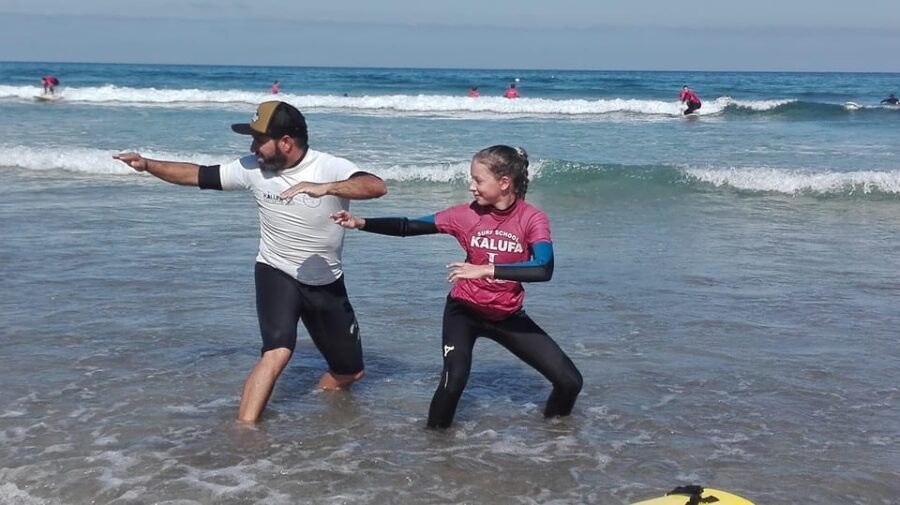
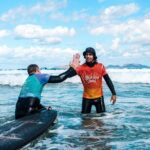
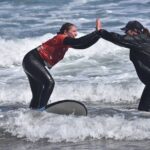
After the beach briefing, you get roughly 2 hours of practice in the water. This is where you build real momentum. Kalufa organizes instruction with coaches always beside you, giving tips both inside and outside the water.
Because the group size is capped at 8 students per instructor, you’re not stuck waiting your turn. That small-group setup is one of the biggest quality signals. It means you can get quick corrections—like foot placement, paddle timing, or how you position your body as a wave rises.
You also get brief stop-and-start moments during the session for quick coaching points. That kind of feedback loop helps you make progress without losing the rhythm of being in the lineup.
One more detail I like: this isn’t presented as a random surf “experience.” It’s a progressive, systematic approach aligned with the ISA program. The result is that skill growth feels less accidental. Even if you aren’t standing immediately, you’ll usually leave knowing what to work on next.
Instructors are often described as energetic and attentive. Names that show up in the school’s instruction staff include Corrado, Marx, Cerrado, and Gualtieri. If you’re hoping for Italian or French instruction, that matters, and the school’s language offering covers both.





Full Day Lesson Option: More Time, More Technique Work
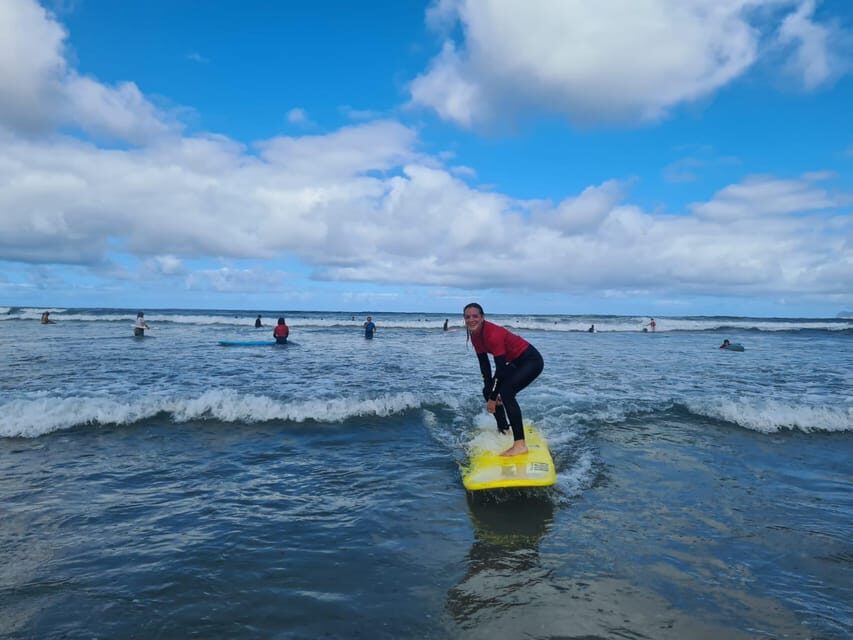
If you choose the Full Day Lesson, you’ll get extra time to improve instead of rushing everything into a single 2.5-hour block.
The structure is:
- The standard lesson flow plus a 30-minute break
- An extra theory lesson to improve technique
- 1 more hour of surfing
That extra technique-focused time can help if you want to refine what you learned earlier rather than repeating the same mistakes in the second session. It’s also a better option if you’re traveling with someone who’s learning slower or faster—you can both benefit from more total practice time.
If your vacation schedule is packed, the half-day lesson is simpler. If you want a more serious day of learning, the full day is the choice.
Price and Value: Is $59 Reasonable?
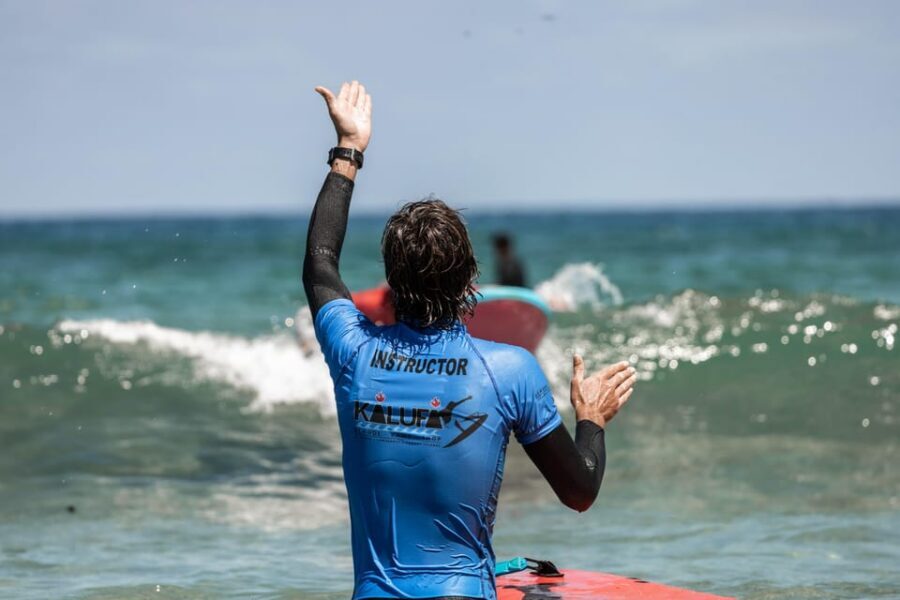
The listed price is $59 per person for a 2.5-hour lesson. On paper, that could sound like “just a surf intro.” In practice, it’s closer to a structured coaching session with real gear included.
Here’s why the value works:
- Surfboard and wetsuit are included
- You get 30 minutes of instruction on the beach
- You get about 2 hours of coached practice
- You also receive free surf material for the rest of the day after the lesson
That last part changes the math. If you plan to keep surfing the same day, you’re getting more than one short activity. You’re buying access to a full stretch of time in the water, not just a timed class.
The small-group cap also supports value. When an instructor can actually watch and correct everyone, you’re more likely to get useful takeaways in a short session.
Who This Surf Lesson Suits Best
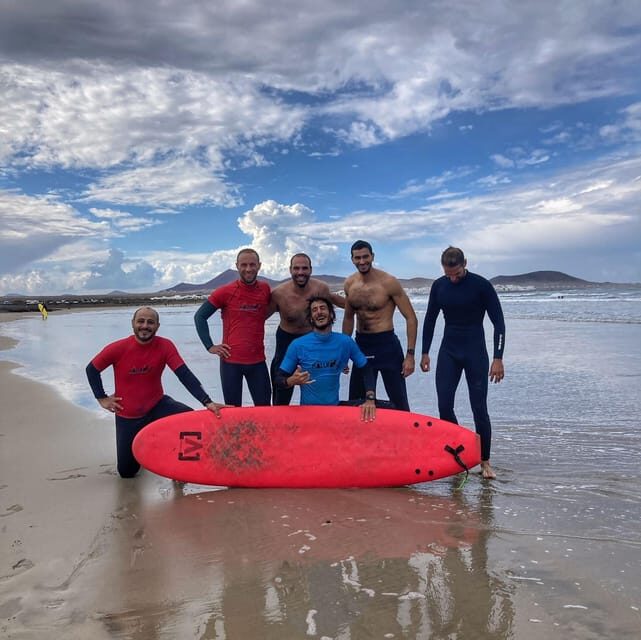
Kalufa is built for all levels, from first-timers to people who already understand the basics. The theory component is particularly helpful for beginners because you’re learning safety rules and how to move around the wave zone.
That said, the lesson has clear limits:
- Non-swimmers are not suitable
- Children under 8 years aren’t suitable
- Children under 10 must be accompanied by one adult during the lesson
If you’re traveling as a couple, the school’s small groups can make it feel more personal. If you’re traveling solo, it’s still structured—just remember that surf days depend on conditions, so flexibility helps your mood.
If your main goal is to get confident in a new surf spot fast, this is the type of lesson that gives you the minimum knowledge you need to avoid guesswork.
Weather-Driven Timing: Plan Your Day Around the Sea
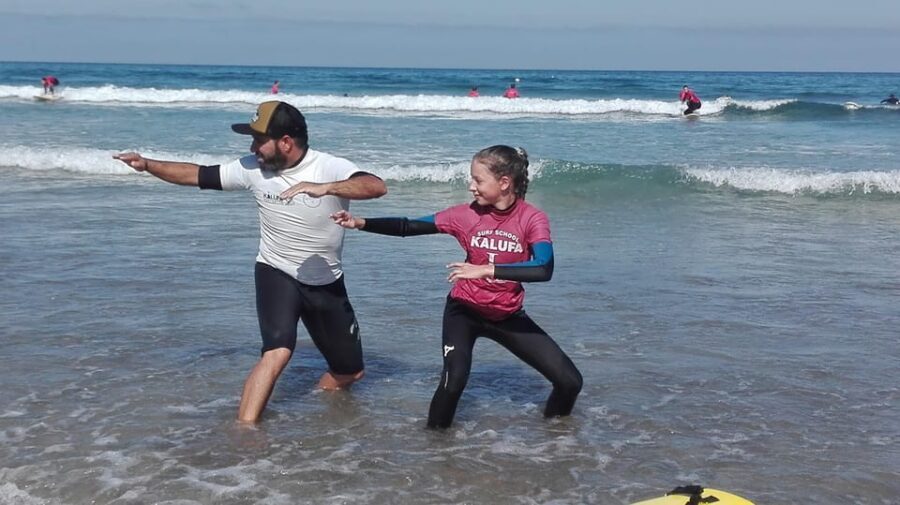
This school explicitly notes time flexibility to match the best weather conditions. Sessions can be in the morning or the afternoon, depending on what the ocean is offering that day.
That means you should treat the day as flexible rather than locked into a fixed itinerary. The lesson time can change with weather, and the meeting time depends on group needs.
Also, there’s a clear instruction: before confirmation, you should text on WhatsApp to check availability and the time schedule. The number given is +34 693 819 586. Do that before you commit, especially in the high season when surf conditions and group sizes can influence scheduling.
Should You Book Kalufa Surf School in Famara?
If you want a surf lesson that teaches safety and wave reading—not just how to stand—book Kalufa. The ISA-style structure, the small groups, and the mix of theory plus two hours of coached practice make it a strong learning setup for both beginners and improving surfers.
I’d book it especially if you care about value: gear is included, and you get extra surf material for the rest of the day. That turns a half-day lesson into something closer to a full surfing day.
If your calendar is painfully tight with no room for schedule shifts, you might find the weather-dependent timing annoying. In that case, build slack time into your day or consider planning something else for later.
FAQ
How long is the surf lesson?
The duration is 2.5 hours.
What does the $59 price include?
It includes the 2.5-hour surf lesson, plus the surfboard and wetsuit.
Is there a theory or classroom part?
Yes. You’ll have about 30 minutes of theory and preparation before you surf.
How many students are in a group?
A group lesson is organized with a maximum of 8 students per instructor.
Where do I meet the surf school?
You meet in Famara Beach parking, in the SOS Lifeguards yellow house zone, at the school van (blue VW T4 or red VW T5).
What languages are offered?
Instruction is available in Italian, English, French, and Spanish.
Do I need to be able to swim?
Yes. The lesson is not suitable for non-swimmers.
What age limits are there for kids?
Children under 8 aren’t suitable. Children under 10 must be accompanied by one adult during the lesson.
What should I bring with me?
Bring swimwear, a towel, and sunscreen.